
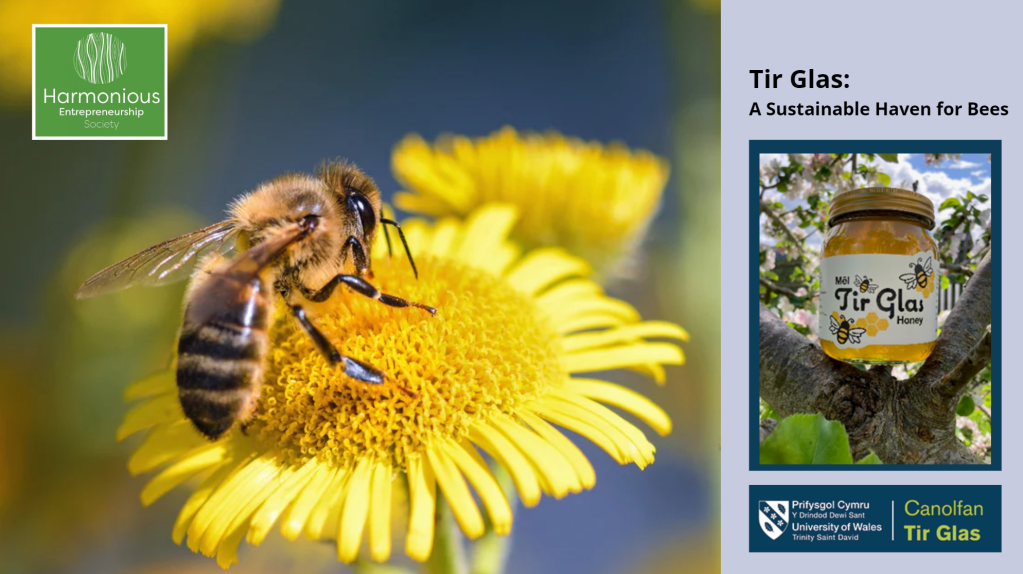
“Welsh bees have evolved over millions of years to survive and prosper in our fickle climate. If nature has decreed Welsh bees suitable for our country, then why go against it?” – Peter Jenkins, Lampeter Beekeeper
Increasingly universities are being required not just to teach about sustainability but to practice it. As a consequence, there has been growing academic and practitioner interest in the Green University Campus. In the UK, its 132 universities are surveyed annually by Uswitch.com a price comparison site and switching service. 124 universities responded to the 2022 survey, which measured the presence of 5 green criteria – green electricity tariff, green gas tariff, renewable installations, electric vehicles, and eco-friendly initiatives. On the basis of the number of features they reported the universities were classified as Platinum (5/5), Gold (4/5), Silver (3/5), and Bronze (2/5). Altogether, 7 universities were in the platinum category, 54 in the Gold category, 34 in the silver, and 9 in the bronze. The University of Wales Trinity Saint David, which is in the Gold category, comes in for special mention. While all of the universities in the Gold category have eco-friendly initiatives in place, such as being hedgehog friendly, UWTSD “keeps honey bees on its Lampeter campus to improve natural pollination and undertook a no mow initiative in May”.
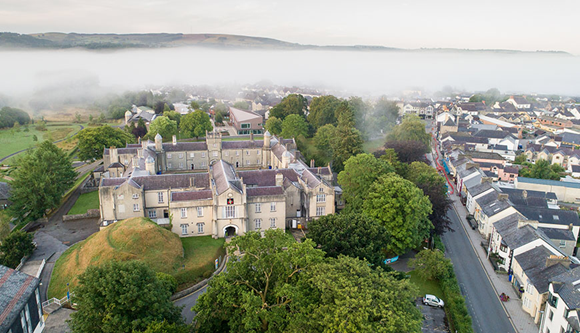
The campus, located in the heart of Lampeter, was founded in 1822 and is the oldest university institution in Wales, whilst Lampeter is a historic agricultural market town of circa 3000 people located in the Teifi Valley of Mid-Wales.
The idea for the apiary on the University campus was championed by Hazel Thomas, a trained chef with an interest in sustainability. Hazel, a Welsh serial entrepreneur, is the project coordinator for Tir Glas. This is a UWTSD project intended to facilitate and accelerate, in and around Lampeter, sustainable economic development that will benefit future generations by creating a confident community full of ideas, without damaging the environment. When she took up her post in May 2021, she contacted the head of the Welsh Government’s food cluster. He sent a letter to its members explaining the Tir Glas project and this prompted an immediate response from the Welsh Honey Cluster. They proposed setting up an apiary on the campus. The idea was approved and supported by the Estates’ team with the help of Peter Jenkins, a local resident, who has kept bees for over 50 years, and Selwyn Runnett, general manager of Woodland Bees, located nearby in St Clears. This is an apiary business committed to sustainable and ethical beekeeping and the conservation and restoration of the European dark bee. Both men are members of the Bee Improvement and Bee Breeders Association (BIBBA).
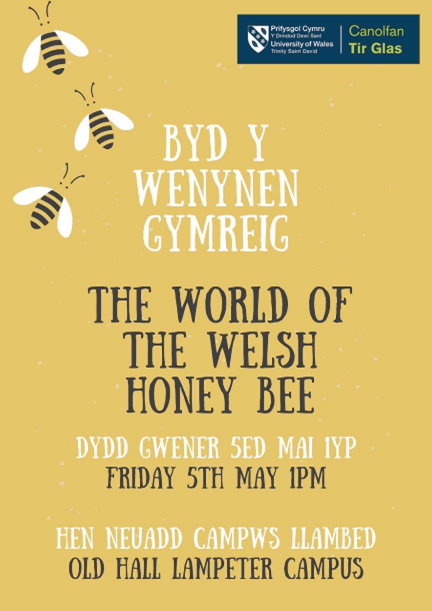
Peter, who has 48 colonies that he inherited from his father, looks after the university bees which forage the wildflower meadows on the campus. Though he advises and trains prospective beekeepers, modestly he does not regard himself as an expert on bees and claims “The more you do it, the more you know how little you know”. Even so, he and Selwyn give talks on bees and beekeeping to the students and members of the general public, including teachers from the local schools. During the Student Union Go Green Week (1-5 May 2023) they delivered a public lecture on the Welsh honeybee.
The Tir Glas project is currently supporting 10 junior schools in Ceredigion to encourage children to learn through nature, with the help of Richard Dunne, author of “The Harmony Project – A new way of Looking at and Learning about Our World”. In June 2023 a conference for teachers was also organised to showcase this work.
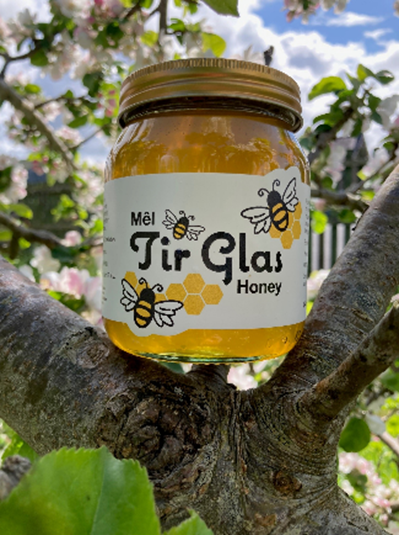
Proceeds from the sale of Mêl Tir Glas (Tir Glas honey) which is now available through the Tir Glas Office on the campus, go towards further developing the apiary.
By developing an apiary on its campus, the University, through its Tir Glas project, is addressing not just SDG 15 (Life on Land) but also 13 (Climate Change) and 4 (Quality Education), while demonstrating how it is possible, through responsible consumption and production (12), to help make communities more resilient and sustainable (11).
Tir Glas and its honey project stand as a testament to UWTSD’s commitment to sustainable development and the creation of enterprising communities that thrive on ideas while safeguarding the environment for future generations.
Come and visit HES alongside UNESCO Bridges Hub UWTSD on the grounds of UWTSD’s Lampeter campus at the upcoming Food Fest in Lampeter 29th July.
© Harmonious-Entrepreneurship.org / Harmonious Entrepreneurship Ltd. (2020-2023). Unauthorized use and/or duplication of this material without express and written permission from the author(s) noted is strictly prohibited. Excerpts and links may be used, provided that full and clear credit is given to Harmonious-Entrepreneurship.org/ Harmonious Entrepreneurship Ltd with appropriate and specific direction to the original content.


