
“I had a yearning to do something completely different with my skill base, something more holistic and community-focused” –Amanda Wood
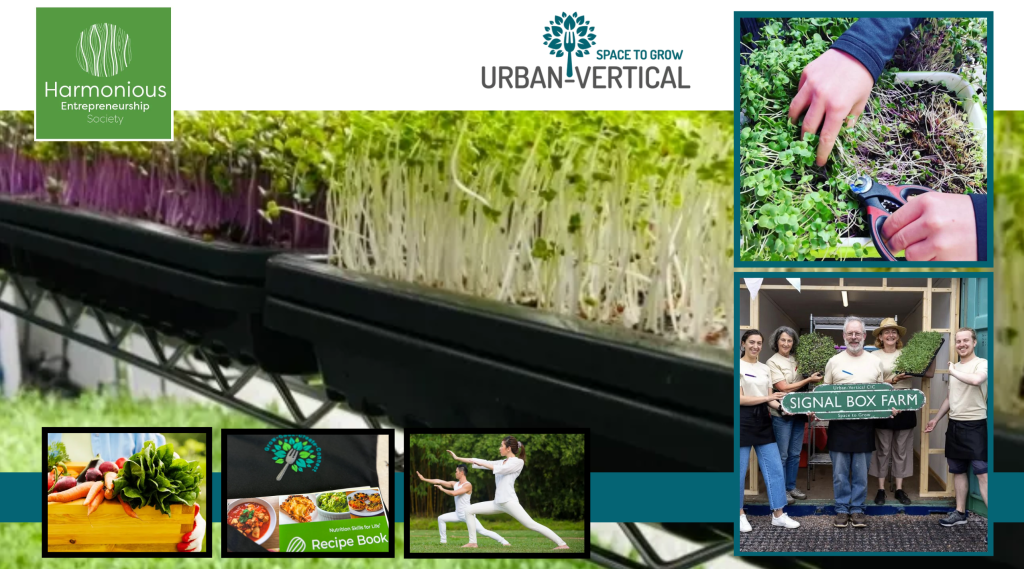
For Amanda Wood, the COVID-19 pandemic was life-changing. Prior to its outbreak in 2020, she was working as a programme manager at a college in Plymouth, in the south-west of England. However, in March 2020, she caught the virus, and so, with her fixed-term contract at the college coming to an end, a new career and life in Wales with her partner beckoned. After she left school, she studied Horticulture and Floristry, with some time spent working in the industry. So she decided to revive her interest in horticulture, initially by growing home-produced salads from seeds. She soon began to realise that she could create a business out of this, and armed with a business plan, she decided to launch a microgreens farm from her partner’s home in Penarth. To do so, she used her own savings and secured a small loan from Purple Shoots, a local micro-finance charity that had been set up to address unemployment and economic problems by offering small loans to people from the poorest communities, those who are unable to secure funding from other sources. So, with the advice and financial support of Purple Shoots, she set up The Micro Greengrocer in March 2021 as an urban farm selling its nutritious fresh produce to restaurants, health food stores, and local farmers’ markets. All of the seeds she uses are organic, and they are grown in peat free Welsh organic compost without the use of fertilisers or pesticides.

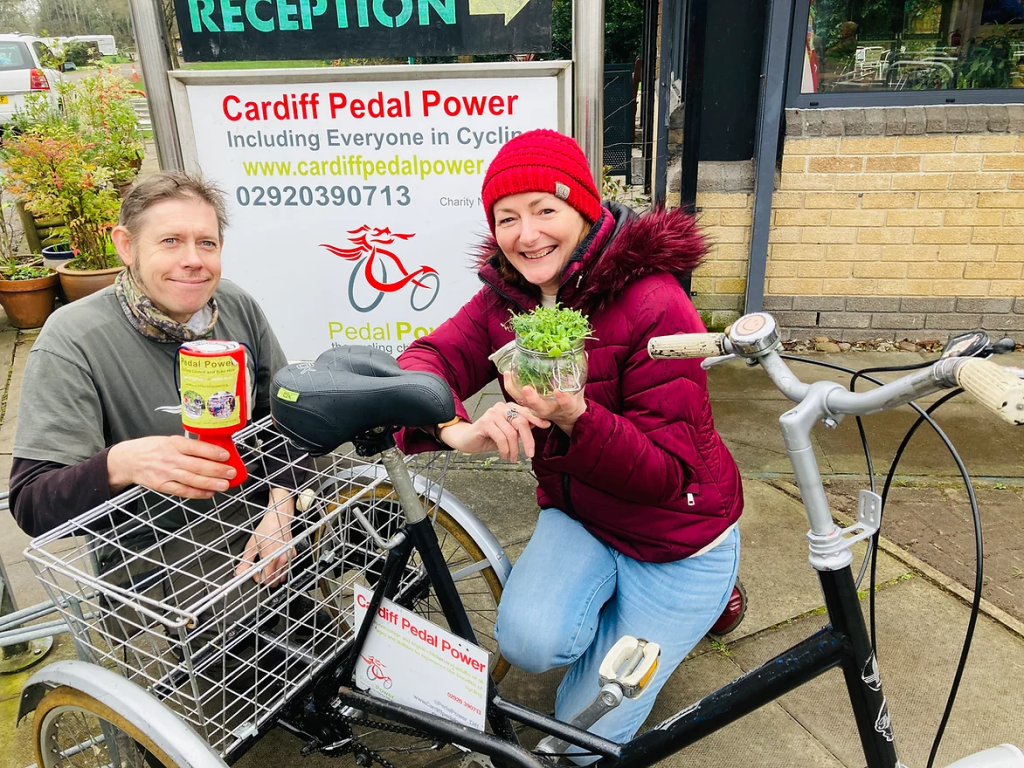
As Amanda points out, she operates the business as sustainably as possible. Not only is her packaging plant based and fully compostable, but her vertical farm is located in a repurposed shipping container that is located in the heart of Cardiff, so initially she was able to deliver to her customers on foot using an 1980s upcycled prom to carry her produce. As the business grew, however, that was no longer possible,, but her commitment to minimising the carbon footprint of the business meant that she was opposed to using motorised transport. However, as she says, “I knew that I could probably load them onto a bike and get across the city more efficiently and continue to do my bit for the planet”. So, after seeing an advertisement of theirs, she contacted Cardiff Pedal Power, a specialist cycle
business that sells and hires bikes in order to “enable everyone to enjoy the benefits of cycling, social inclusion, and health and well-being activities.” They serviced a 1980s tricycle that they had in their workshop, so now Amanda cycles around the city delivering her produce. In return for Pedal Power’s support and kindness, she supplies them with regular complimentary greens to add to their vegetarian menu in their Community Café. A symbiotic, win-win partnership.
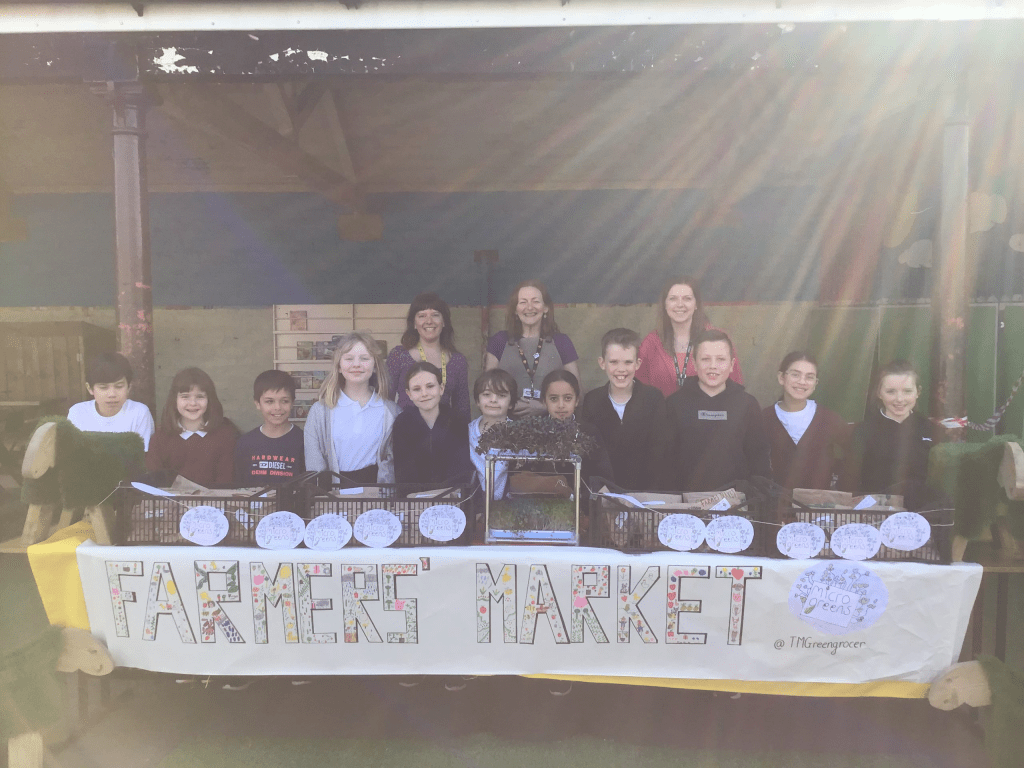
In addition, a proportion of the Micro Greengrocer’s profits are donated to charities: the Trussell Trust (UK Food Banks) and WOW (a charity supporting the perma-garden training of marginalised women in Mozambique). Also, Amanda has collaborated with a local primary school, giving the children the opportunity to plant and grow their own crops, which they sell at a farmers market in less than half an hour, making £120.I
In 2022, Amanda launched Urban-Vertical CIC a non-profit organisation dedicated to empowering the local community through food, education, and well-being activities. Its mission is to make a positive impact and create a better future for all. It addresses SDGs 3 (Good Health and Well-Being), 9 (Industry, Innovation, and Infrastructure), 12 (Responsible Consumption and Production), 13 (Climate Action), and 17 (Partnerships for the Goals), while through its charitable giving it is also addressing SDGs 2 (Zero Hunger) and 5 (Gender Inequality) as well as 4 (Quality Education).
Reference
Hoskin, R., (2022), The Micro Greengrocer bringing vertical farming to Cardiff. The Cardiffian. 11th March.
© Harmonious-Entrepreneurship.org / Harmonious Entrepreneurship Ltd. (2020-2024).
 HES 2020-2026