
“Sharing knowledge occurs when people are genuinely interested in helping one another develop new capacities for action; it is about creating learning processes”. (Peter Senge)
In the early 1990s, Professor Allan Gibb and I were invited by the Universiti Utara Malaysia to deliver a one-week training programme intended to train Malaysian academics in how to teach Entrepreneurship. The University was a new, purpose-built institution located in Northern Malaysia. It was intended to act as a catalyst for economic development and was the first Malaysian University to specialise in Business and Management.
Since those early days much has changed in Malaysia. Thousands of academics have received entrepreneurship education training and since 2013 all students have been required to take at least one course in entrepreneurship, while the universities themselves have been encouraged not just to teach about entrepreneurship but to become hubs of innovation and new venture creation. This has been aided by the Ministry of Higher Education’s Entrepreneurial University of the Year Award and has resulted in 2 of the country’s 20 public and 64 private universities being accredited by the international Accreditation Council for Entrepreneurial and Engaged Universities (ACEEU).
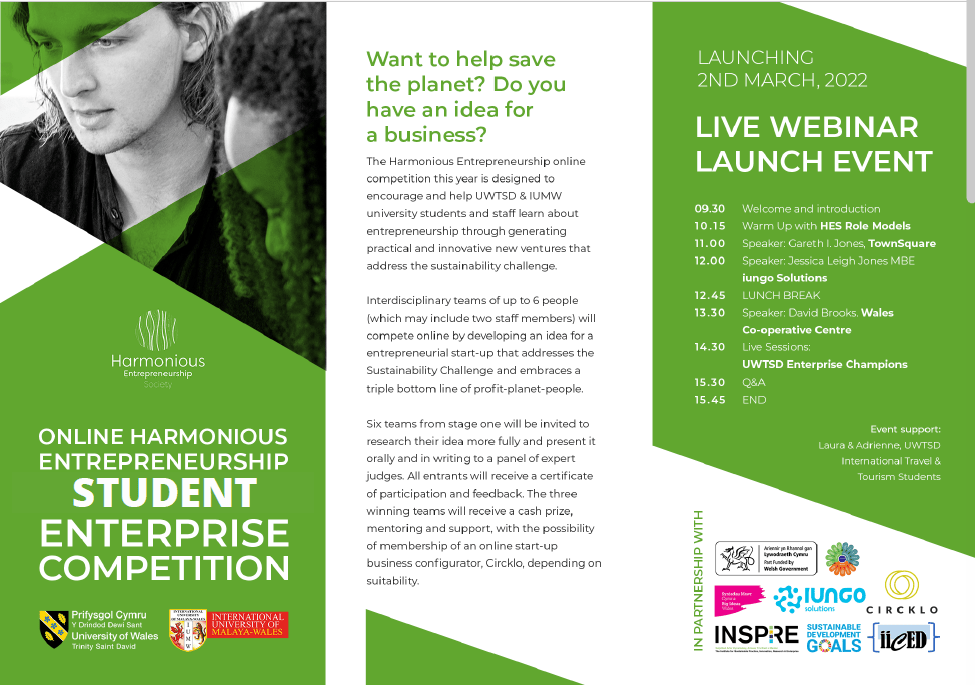
While the research of Ahmad and Buchanan concluded in 2015 that much of the teaching relies on traditional passive learning and Malaysian students display a preference for employment rather than new venture creation, Felicity Healey-Benson and I found an enthusiasm and commitment on the part of both of the students and staff when we piloted our online experiential Harmonious Entrepreneurship Competition. Not only did the teams from the International University of Malaya-Wales win the competition but they acknowledged that they learned a lot in the process and, as one senior member of staff admitted, the competition “actually opened up a deeper consideration into how the current module and learning structure is designed and the potential for improving it” (Healey-Benson and Kirby, 2024).
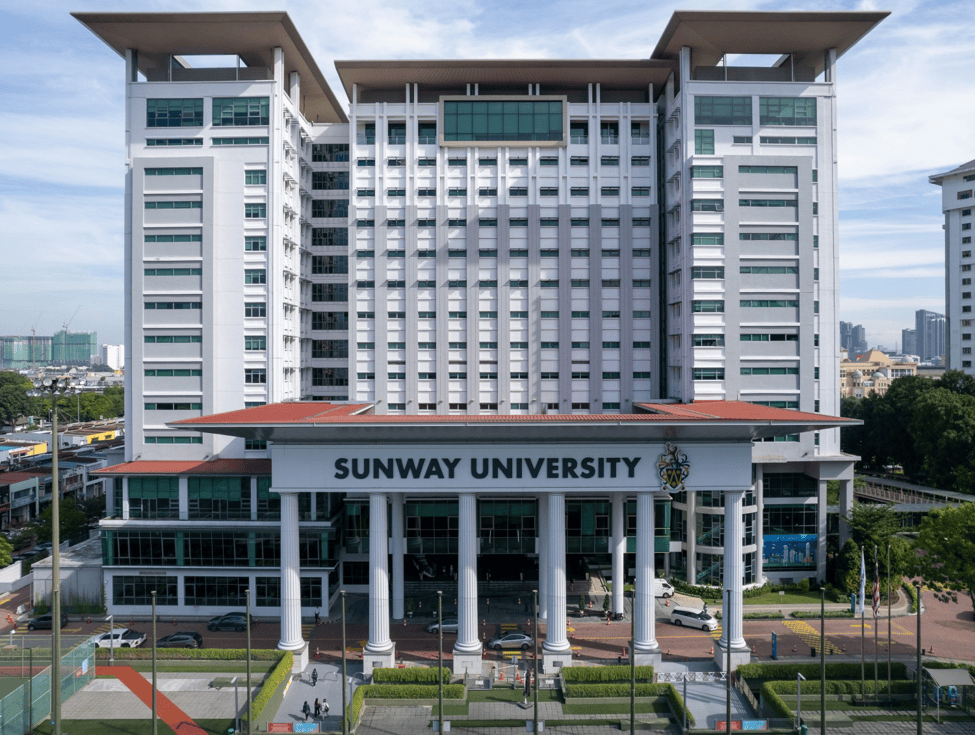
It would appear, therefore, that there is still scope for knowledge transfer, despite the subsequent developments, some 35 years after our initial Entrepreneurship Education intervention. However, given the changes and growth that have taken place in the economy there would also seem to be opportunities for reverse knowledge transfer. Countries and institutions that have been slow to adopt entrepreneurship could learn a great deal from developments in Malaysia with respect to the creation of an entrepreneurial ecosystem. The country’s universities have embraced the third mission and are contributing to innovation, the creation of jobs and economic development. However, some, like Sunway University, have gone beyond that.
Located some 10 miles (16 kilometres) southwest of the capital, Kuala Lumpur, Sunway is a modern not-for-profit private university founded in 2004 as a pioneering mission-driven 5th generation university¹ that nurtures “holistic leaders equipped to tackle planetary health crises and drive equitable, sustainable development for a better tomorrow”. To this end it focuses on Sustainability, Entrepreneurship and Innovation while ensuring that its core values of integrity, humility and excellence are fully incorporated into its teaching, research and operations. Known as “The Campus with a conscience”, the University was the recipient of the 2024 Times Higher Education (THE) Award for Outstanding Support for Students and is ranked in 283rd place in the THE World University Rankings for 2027, being placed 5th in Southeast Asia and 3rd in Malaysia. While Sustainability is embedded in the University’s academic activities, it also features strongly in the campus and the University is ranked 45th in the 2026 Times Higher Education Sustainability Impact Ratings. Importantly Sunway is ranked as the number 1 university in Malaysia for graduate employability.
If we are to save the planet and its inhabitants Academia, Governments and Industry should look closely at how Malaysia’s entrepreneurship ecosystem and economy have developed over the past 35 years, and particularly at the evolution of Sunway University with its focus on sustainability and adherence to its fundamental core values.
David.
Note
- 5th generation universities are a novel type of quintuple academic institution (Carayannis et al. 2012) that aims to benefit society and address the UN’s Sustainable Development Goals.
References
Ahmad, S.Z. and Buchanan, R.F. (2015), Entrepreneurship Education in Malaysian Universities. Tertiary Education and Management. 21(4), 349–366.
Carayannis, E.G., Barth, T.D. and Campbell, D.F.J. (2012), The Quintuple Helix innovation model: global warming as a challenge and driver for innovation. Journal of Innovation and Entrepreneurship. 1(1), 2.
Healey-Benson, F. and Kirby, D.A. (2024), The Harmonious Entrepreneurship Online Global Student Competition: An Example of Meaningful Extracurricular Entrepreneurship Education. In S. Preedy and E. Beaumont (eds) Extracurricular Enterprise and Entrepreneurship Activity: A Global and Holistic Perspective. Leeds: Emerald Publishing Ltd.

