
Our mission is to help local communities to discover their own natural and cultural heritage treasures…put them into action using sustainable tourism practices in order to gain financial and psychological benefits – Ahmed Yehia

The small River Nile island of Bigeh, located in the Aswan Governorate of Southern Egypt, is a World Heritage Site. It is located close to the islands of Philae and Agilkia, the latter being the present-day location of the ancient Egyptian Philae temple complex, relocated in the 1960s when the Aswan High Dam was constructed. For 5000 years, Bigeh was the home for members of the Nubian ethnic group, and, according to ancient legend, it is the source of the Nile River and the burial place of the God of Fertility, Osiris. Some 50 years ago, however, its inhabitants deserted the island in search of more modern services and facilities. It remained depopulated until 2017, when Ahmed Yehia, in partnership with the previous residents and two friends and former colleagues from Vodafone Egypt, started to redevelop it by introducing water, sewerage, and electricity and building an ecolodge, Eco Nubia. The lodge, which overlooks the temple of Philae, comprises 9 traditionally built rooms, a banquet room and a restaurant that serves traditional Nubian food using organic produce grown on site. Apart from sightseeing and visiting the local Nubian craft markets, visitors can engage in a range of activities, including birdwatching, hiking, kayaking, lake fishing, sailing, and swimming in “The Great River”.
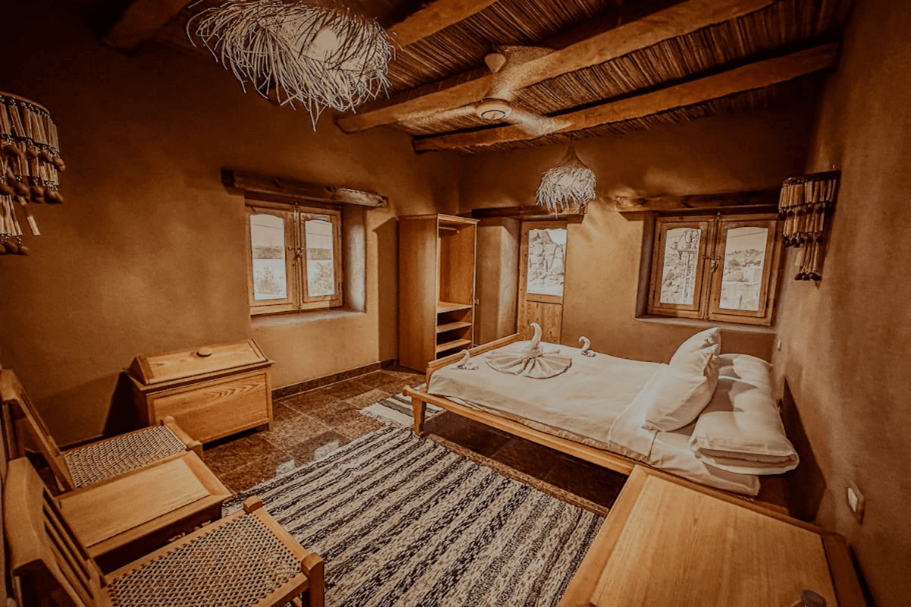
As a result, jobs for some 36 people have been created, one-third of them for women, while a Nubian architecturally designed community centre has also been built. This accommodates workstations for the production of Nubian crafts by local families who are encouraged and helped to rebuild their homes using traditional Nubian designs, techniques, and materials. According to Ahmed, who graduated from Cairo University in 1998 with a degree in Architecture, the objective was “to rebuild the infrastructure and houses and to put the island on the tourism map as an eco-friendly destination”.


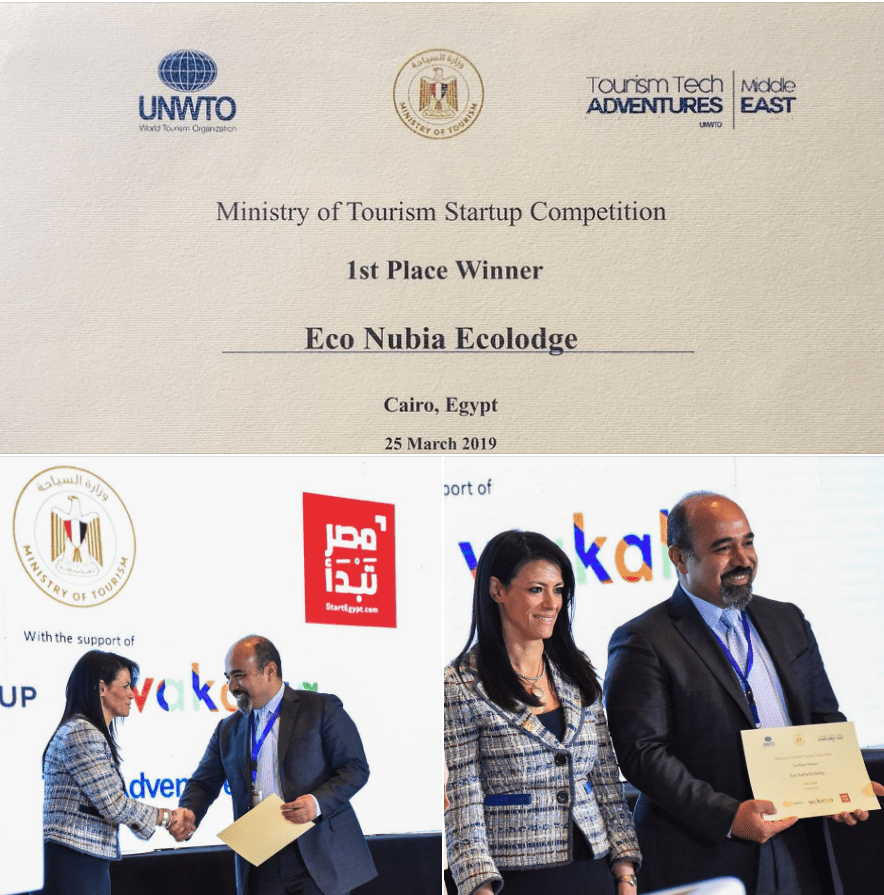
For 13+ years, Ahmed had been employed by Vodafone in IT, Marketing and Strategy, but in 2014 he quit his job to become self-employed. Immediately prior to doing so, from 2012–2013, he had studied for a Masters degree in Cultural Heritage Management at the University of Paris 1: Pantheon-Sorbonne. Accordingly, the venture he opened, the ECO Group, included an ecotourism business, ECO Adventure. This involved taking tourists on different eco activities, such as camping in the western desert or scuba diving in the Red Sea, and led to ECO Events, a bespoke corporate events venture. Intended for the employees of international companies, a popular location for such events was Heissa Island, south of Aswan and near Agilkia, and the Philae temple. The participants stayed in the homes of the Nubian families, who were well rewarded for accommodating them. In 2017, however, the owners of Bigeh Island approached Ahmed and asked him if he and his company could help them develop the economy of the island as he had done at Heissa. This was just at the time when the Egyptian military were restricting internal travel for security reasons, so Ahmed decided to refocus the business on hospitality rather than tourism as previously. As a result, he built the ecolodge, which is managed by the community and supervised by him. So, as he says, “in partnership with the Nubian community, we have put Bigeh on the map of Egyptian ecotourism”. Indeed, by 2019, after being in business for only two years, they were not only nominated for an award from the world tourism organisation, but won the category for the best start-up in sustainable tourism in the Middle East.
Like his fellow countryman, the late Professor Ibrahim Abouleish (1), Ahmed is a Harmonious Entrepreneur. His Eco Group business is intended to make as much money as possible but not at the expense of people or the planet, and, unlike the Aswan High dam project, he wants Eco Nubia to promote and preserve Nubian culture rather than wipe it out. Eco Nubia addresses, therefore, 12 of the 17 SDGs, namely 1 (No Poverty), 2 (Zero Hunger), 5 (Gender Equality), 6 (Clean Water and Sanitation), 8 (Decent Work and Economic Growth), 9 (Industry, Innovation and Infrastructure), 10 (Reduced Inequalities), 11 (Sustainable Cities and Communities), 12 (Responsible Consumption and Production), 13 (Climate Action), 15 (Life on Land) and 16 (Peace, Justice and Strong Institutions) Ahmed’s aim now is to see how they can incorporate the remaining SDGs into the project.
Note
- Professor Abouleish created a 3,000 person international trading company, SEKEM Holding, by turning a hostile area of desert on the outskirts of Cairo into a thriving, fertile agricultural community by using biodynamic agriculture and by housing the company’s employees and caring for their education, health and cultural development.
References
Anonymous (2023), Eco Nubia: a model for reviving Egypt’s Heritage while preserving the environment The African Development Bank Group. 4 April.
Connerty. A. (2021), How ecotourism is bringing new opportunities to Egypt’s Nubian communities. Start Up Guide.20 May.
Shore, A. (2020), New Possibilities Found in the Past. The Heart of Waraba.1 August.
© Harmonious-Entrepreneurship.org / Harmonious Entrepreneurship Ltd. (2020-2024).
 HES 2020-2026