
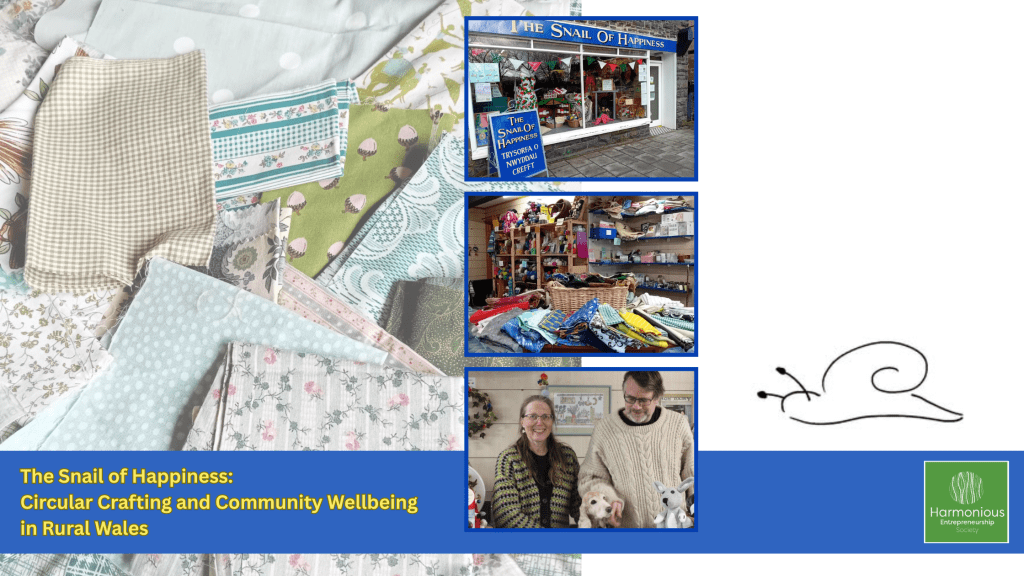
“The crafting world is full of the idea that more is better. We want to change that, showing that higher quality is better, preloved is better, re used and repaired is better” (Jan, co owner of The Snail of Happiness)

The Snail of Happiness is an independent craft shop based in the small West Wales market town of Lampeter, the location of the country’s oldest University College. Owned and run by Jan and Jon since March 2022, the shop grew from a long running blog of the same name. It not only sells crafted items but offers short courses and programmes and provides a carefully curated space that encourages people to make and mend in ways that are enjoyable, affordable and environmentally mindful. From the beginning, Jan, who holds a PhD in ecology and has worked in environmental research and policy, recognised that crafting can generate significant waste. Many makers accumulate materials they never use, leading to disposal that contributes to landfill, and she saw an opportunity to translate her ecological understanding into a form of practical community action. The Snail of Happiness seeks to reverse this pattern by keeping materials in circulation and helping people access high quality supplies without unnecessary environmental cost.
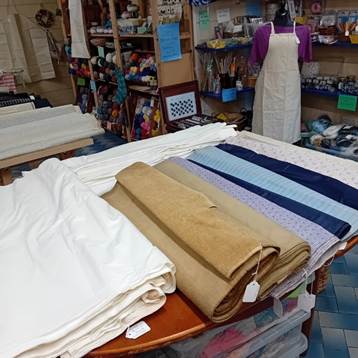
Much of the stock is therefore preloved, sourced from individuals who are de stashing or clearing space, with Jan sorting and assessing donations to ensure that every item that still has life left is passed on to someone who can make use of it. When new materials are required, the shop chooses them with care, favouring British and Welsh wool, natural fibres, sustainable tools and fabrics, and suppliers with strong environmental and social credentials. This balance of reclaimed and responsibly sourced items forms the basis of a small-scale circular economy that gives customers a practical route towards more sustainable crafting. In addition, advice is freely available to customers who need help with crafting projects.
The shop has also become a valued community space. It hosts a Craft Club and Knit Night each offering opportunities for people to meet, talk and learn new skills. Customers come from a wide range of backgrounds and ages, including neurodivergent makers and individuals living with dementia who appreciate the calm, friendly environment. Many drop in to chat about their projects or simply talk through the ordinary challenges of daily life, and the shop has quietly evolved into a place of social connection as much as a retail outlet. Jan often notes that she hears about customers’ joys and difficulties, from family changes to personal losses, and that the shop provides a setting where people can feel seen and supported.
Operating in a rural area brings its own challenges, and the business has benefited greatly from long term support from locally based advisers who understand the realities of working in Ceredigion. Guidance from organisations such as Antur Cymru, along with access to small practical grants, has allowed the shop to invest in improvements such as a new till system and footfall monitoring technology. These changes, although modest, have made a significant difference to daily operations and have helped the business adapt to local patterns of trade. Together with neighbouring small businesses, the Snail of Happiness contributes to the resilience and vibrancy of Lampeter’s high street, reinforcing the importance of community oriented rural enterprises.
At the heart of the business is a written zero waste policy that carries the clarity and discipline of Jan’s ecological expertise, ensuring that every effort is made to prevent materials from being discarded unnecessarily. This commitment aligns strongly with responsible consumption and production, while the community focus directly enhances wellbeing and social inclusion. In its combination of environmental care, social connection and economic participation, the Snail of Happiness exemplifies the principles of harmonious entrepreneurship, demonstrating that small rural enterprises can create substantial social and ecological value without the need for large scale growth. It shows that with thoughtful sourcing, active community involvement and a clear commitment to sustainability, a craft shop with one door can make a meaningful contribution to a more resilient and caring rural economy.
In recent years the wider world has noticed the depth of this contribution. The Snail of Happiness has been shortlisted for several national awards, including High Street Hero in The Small Awards for the second year running, the Small Business Britain Green Growth Awards and Enterprise Nation’s Realising the Remarkable initiative, as well as local recognition through the Caru Ceredigion Awards. These acknowledgements sit lightly with the enterprise, yet they underscore the significance of what is being created in this small rural space. Jon attended the launch of the Willow Review in London and Jan was invited to a reception at 11 Downing Street, reflecting how the values and practices of the shop resonate far beyond Lampeter. Another announcement is due in the new year, yet even without the headlines the message is clear. A thoughtful, zero waste craft shop in a rural town can hold national attention because it demonstrates what sustainable, community rooted enterprise looks like in practice.

The work of the Snail of Happiness contributes to a wide constellation of Sustainable Development Goals because its everyday practices bring environmental care, social connection and rural economic resilience together in a coherent way. Its commitment to preloved materials, re use, repair and a clearly articulated zero waste policy aligns naturally with SDG 12 on responsible consumption and production, while the welcoming atmosphere it creates for neurodivergent makers, people living with dementia and those seeking companionship supports SDG 3 (Good health and well-being) through its quiet enhancement of community wellbeing. As a small rural enterprise that provides ethical local employment and strengthens the local economy, it contributes to SDG 8 (Decent work and economic growth) , and its use of circular principles and simple technological improvements to sustain a fragile high street speaks to SDG 9 (Industry, innovation and infrastructure). The shop’s inclusive ethos reduces barriers for people who might otherwise feel excluded, reflecting the intent of SDG 10, and its role in nurturing the social fabric of Lampeter aligns closely with SDG 11, which emphasises the importance of sustainable towns and communities. At the same time, the enterprise’s environmental foundations, informed by Jan’s ecological expertise, support SDG 13 by reducing waste and lowering the environmental cost of crafting. These achievements are strengthened by the partnerships that make the work possible, from local business advisers to neighbouring traders, contributing to SDG 17 and demonstrating how small, place-based enterprises can advance multiple sustainability goals through steady, thoughtful practice.
© Harmonious-Entrepreneurship.org (2020-2025)
 HES 2020-2026