
“One person can’t change the world but together we can all make our own tiny difference” (Rachel Watkyn).
Rachel Watkyn OBE is a Business Studies graduate of De Montfort University in the UK, a serial entrepreneur, and one of the most successful women entrepreneurs to have appeared on the U.K. TV programme “The Dragon’s Den”, despite being told her idea was “pathetic” by one of the Dragons. She is also the founder and CEO of a highly successful business that has a turnover of £10 million a year, some 200,000 customers, over 100 employees, and a 1500 product range.
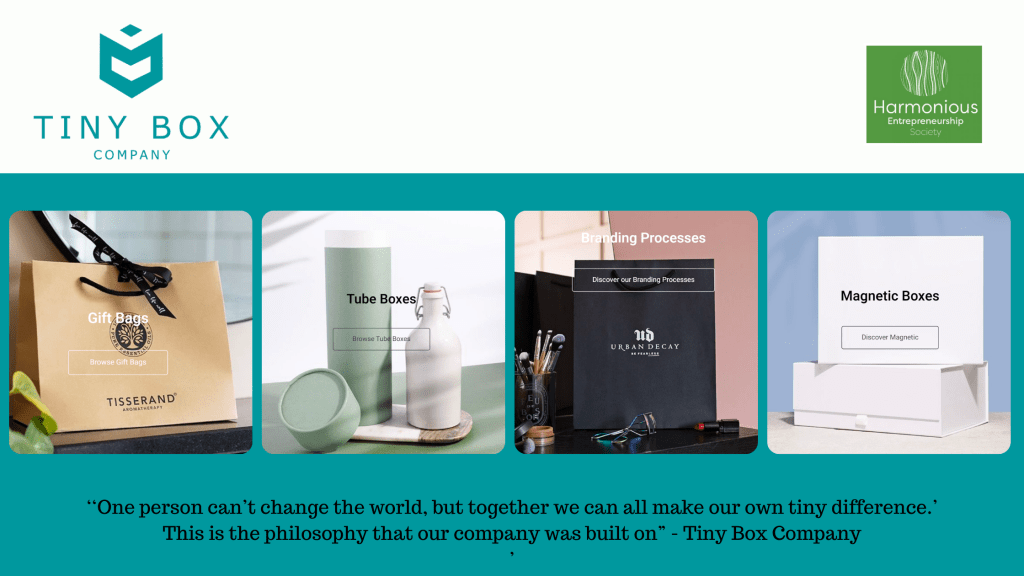
Despite always wanting to own her own business, Rachel had various jobs after graduating in 1993, including selling financial systems for a large software company. This took her to Sierra Leone, where, from 1998 to 1999, she was responsible for implementing a new financial system for the Government. At that time, the country was in the middle of a violent civil war, and despite receiving vast amounts of aid, people were starving. She decided that she wanted to help and formulated a plan to set up a Fairtrade type jewellery business where the jewellery would be designed in the U.K. and made by women in Sierra Leone. Unfortunately, owing to ill health, she was not in a position to do so until 2006, at which time her sister suggested she should use environmentally friendly packaging that was as ethical and sustainable as the jewellery her business, Tiny Difference, was creating. After months of research, she determined that it was not possible to purchase small quantities of eco-friendly jewellery boxes, so she decided to set up a box company, and, in 2007, she launched The Tiny Box Company from a bedroom in her parents’ home. It was in the following year, in September 2008, that the company featured on The Dragons’ Den and secured a £60k investment for a 40 percent share of the business from two of the Dragons.
Within minutes of the show, the website of the company crashed. It was the only company in the UK selling recycled and eco-friendly recyclable packaging, and demand for their products was so great that they had to relocate. They continued to grow throughout 2009, and in 2010, they won the first of several awards, receiving the National Small Business Award as Recycler of the Year. Given the company’s philosophy that luxury and beauty need not be compromised when making ethical choices, the business grew very quickly, and by 2021, it was the largest online gift packaging company in the UK, exporting to 42 countries. It is mainly a B2B operator, but it has no minimum order size, and while it stocks millions of boxes and bags, it also offers a bespoke design service.
Despite the success of the business, the company has experienced numerous challenges. The warehouse has been flooded twice, there has been a warehouse fire, the company’s website and bank account have been hacked believed to be by a competitor and they have been snowed in, requiring orders to be delivered by helicopter. On top of that, there has been Rachel’s health. Apart from suffering from burnout from pushing herself too hard in the early years of the business, she has suffered from cancer. As she has acknowledged, ”trying to keep the business moving forward whilst dealing with each health issue has been extremely difficult, but I have a fantastic team with me and there is no way I could have achieved without their support”.
Having won various business awards, including the Inspirational Mentor award at the Women’s Inspirational Awards in 2023, her aim is to inspire and encourage entrepreneurs and “to help pave a way forward for us all to live more ethically and sustainably”. In the New Year’s Honours list for 2024, she received an OBE (Officer of the Order of the British Empire) for her contribution to Sustainability, Ethical Business Growth and Exports. Her mission now, she says, “is to encourage other female entrepreneurs to pursue their ambitions and passions”.
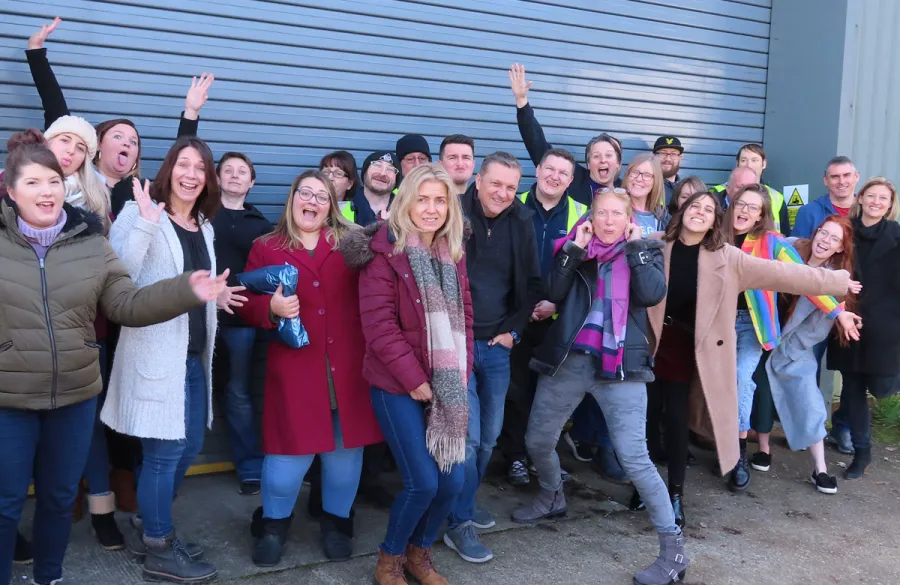
While clearly a commercial operation intended to create jobs and wealth, the Tiny Box Company is equally concerned about people and the planet. It addresses SDGs 8 (Decent Work and Economic Growth), 9 (Industry, Innovation, and Infrastructure), 12 (Responsible Consumption and Production), 13 (Climate Action), 5 (Gender Equality), and 10 (Reduced Inequalities) while recognising, as it does, not just the significance of the founding entrepreneur, but the importance of the entrepreneurial team.
References
Buchholz, L., (2022), Success Story: Rachel Watkyn.March8. June, 16.
Matthews, V. (2022), Unboxing an entrepreneurial success story. The Telegraph, 9th November.
© Harmonious-Entrepreneurship.org / Harmonious Entrepreneurship Ltd. (2020-2024).
 HES 2020-2026