
Until we restructure this education system, we are failing our young people -Rebecca Bowyer
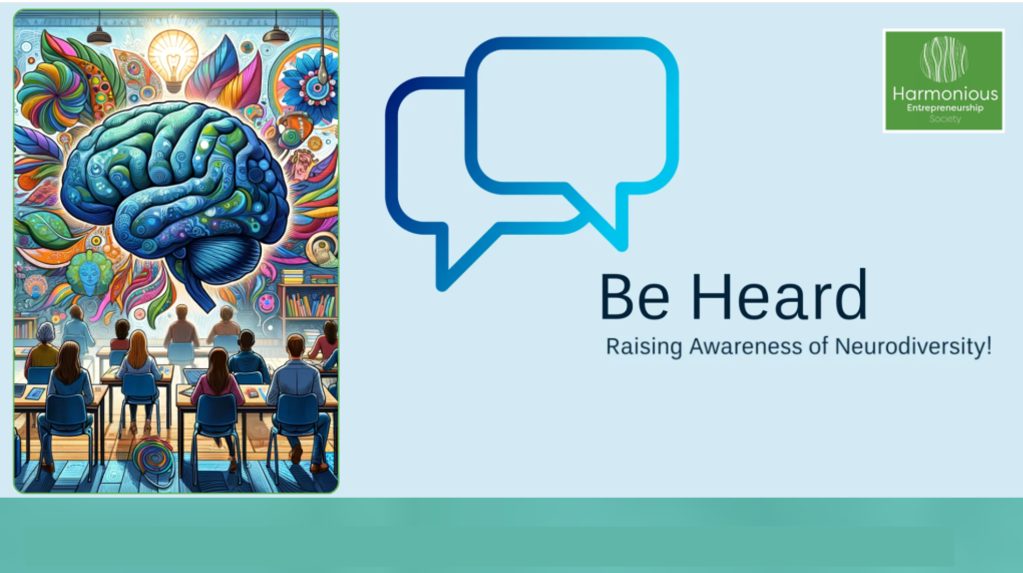
While there is growing awareness of Neurodiversity and the special educational needs of Neurodiverse children and young people, many non-neurotypical pupils and students still struggle to achieve educationally and, subsequently, to find employment. They are frequently classed as badly behaved, problems, or failures, and in the UK, it is estimated that between 50 and 85 per cent of those entering prison are Neurodiverse. Although teachers and educators have often had no training in how to deal with Neurodiverse pupils and students, our research (Kirby & Honeywood, 2007) suggests that it is not just the teachers that are at fault, but the education system itself, as it favours those with a left-brained, passive learning preference.
Not all Neurodiverse young people are “problems or failures”, however. Indeed, while not being successful academically, many, like Richard Branson and Bill Gates, have gone on to become highly successful entrepreneurs. Being Neurodiverse they think and behave differently from their Neurotypical colleagues, and this includes the way they learn. Research has shown that successful entrepreneurs are often not only Neurodiverse, but they tend to have a right brain learning preference. This would explain why so many do not succeed academically in an education system where right-brained experiential learners are at a disadvantage.
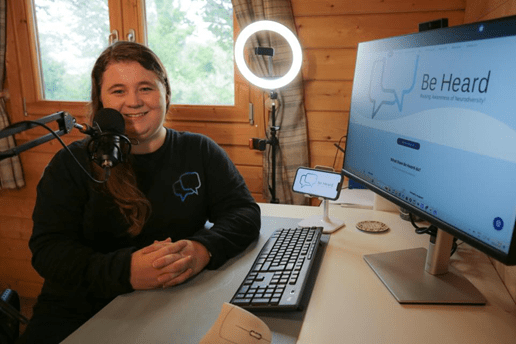
Having a first-class Honours degree in Business Management and Marketing from Bangor University twenty-two-year-old Rebecca Bowyer is not an academic failure. However, she is very entrepreneurial and clinically Neurodiverse, having been diagnosed with dyslexia and autism. Indeed, it is her experience as a Neurodiverse student and the way she has been treated that have prompted her to become self-employed. As she says, she has been mocked “for being stupid or different,” and it was this experience that convinced her to launch “Be Heard” in July 2022. Located on the island of Anglesey, its mission is to “make individuals with difference feel understood and valued”. Rebecca does this by raising awareness of Neurodiversity and varying communication styles and processing methods through education, support and compassion for both individuals and organisations. Given the location of the business, she does so both face-to-face and virtually, offering advice and support on a one-to-one basis to pupils and students, parents, employers, and educators.
While Rebecca attributes her mindset and achievements to her mother, she has also had help in setting up her business from Bangor University’s B-Enterprising Team and Big Ideas Wales, a Welsh Government funded project intended to support young people aged between 5 and 25 to develop an idea for a business. According to her Big Idea Wales mentor, Julie Williams, not only is Rebecca’s business thriving but she has “become a Big Ideas Wales Role Model, offering support and advice to other neurodivergent entrepreneurs”.
‘Be Heard Communications – Raising Awareness of Neurodiversity’ is a social enterprise that addresses SDGs 3 (Good Health and Wellbeing), 4 (Quality Education), 10 (Reduced Inequalities) and contributes to SDG 16 (Peace, Justice, and Strong Institutions). It is a much-needed initiative launched by someone who has learned experientially how to survive and succeed in a world that does not fully understand that not everybody is Neurotypical or knows how to harness the creativity and strengths of the Neurodiverse mind.
References Kendrick, S. (2023), Meet the Anglesey entrepreneur helping neurodivergent youth. North Wales Chronicle. 18th October.
© Harmonious-Entrepreneurship.org / Harmonious Entrepreneurship Ltd. (2020-2024).
 HES 2020-2026